Stone Conservation & Repair
Replacing stone is the last resort, not the first. Where a face has eroded or a section has broken down, we repair it — letting in new stone where one is past saving, pinning loose work, and consolidating what’s there — so the building keeps its original fabric and its character.

What this involves
- Stone indents — cutting out failed stone and letting in a match
- Mortar repairs and piecing-in to worn or broken faces
- Micro-pinning and consolidating loose or delaminating stone
- Matching new stone and mortar where renewal is unavoidable
What’s typically included
- An honest assessment of what can be saved and what can’t
- A written scope so you know what’s being repaired and why
- Like-for-like materials matched to the building
- Repairs that keep as much original stone as possible
Ornamental and figurative carving — gargoyles, sculpture and the like — is specialist work. We do the masonry and bring in a trusted carver where a job calls for it, rather than pretend it’s our strength.
Who it’s for
Common questions
Will you replace the whole stone?
Only if it’s genuinely beyond repair. Wherever we can, we repair or piece-in so the original fabric stays. Cutting out and replacing a stone is a last resort, not a default.
Can you match our existing stone?
Usually, yes. We match stone type, mortar, sand and colour as closely as the building allows — the aim is a repair that settles in, not one that stands out.
From the journal
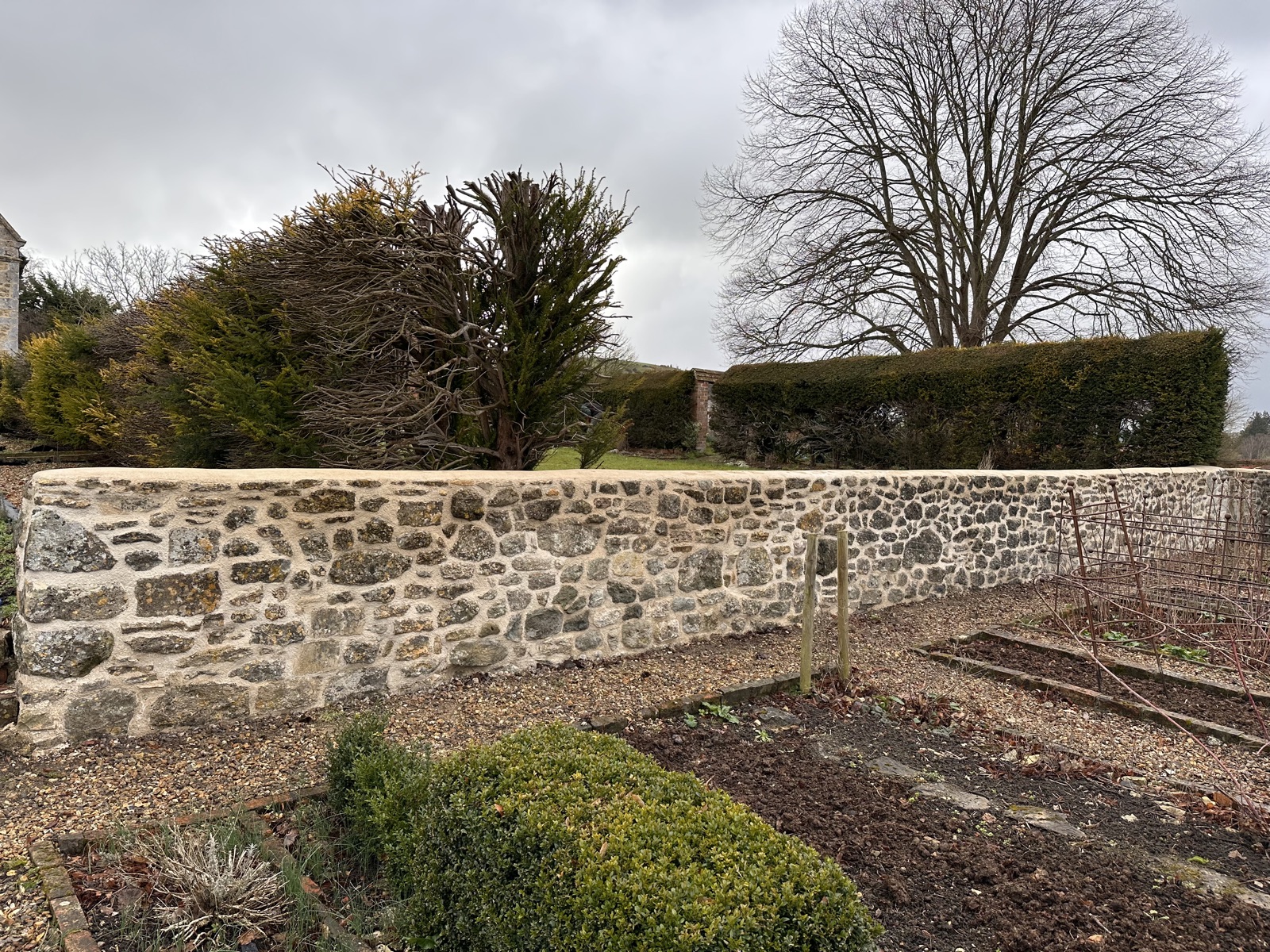
5 Signs Your Stonework Needs Attention (Before It Gets Expensive)
Stone walls rarely fail overnight — they warn you first. The five signs we see most often around Dorset and Somerset, what each one means, and why catching them early saves money.
Read Repair Hierarchy in Conservation: Retain, Repair, Replace
The conservation discipline that gives the best outcomes: retain what's sound, repair what isn't, and replace only where you must. What that looks like in real stonework.
Read


